




Extreme rainfall induced risk mapping for metro transit systems: Shanghai metro network as a case
文章作者(*为通讯):
1. Dongming Zhang 1,3,*
2. Hao Bai 1,3
3. Canzheng Zheng 5
4. Hongwei Huang 1,3
5. Bilal M. Ayyub 2,3,4
6. Wenjun Cao 6
作者单位:
1.Key Laboratory of Geotechnical and Underground Engineering of Minister of Education and Department of Geotechnical Engineering, Tongii University, Shanghai 200092, China
2.Center for Technology and Systems Management, Department of Civil and Environmental Engineering, University of Maryland, College Park, MD,20742, USA
3.International Joint Research Center for Resilient Infrastructure, Tongji University, China
4.Applied Economics Office, National Institute of Standards and Technology, Department of Commerce, USA
5.Jinan Rail Transit Group Co., Ltd, Jinan, China
6.Department of Civil Engineering, the University of Hong Kong, Hong Kong, China
关键词:
Risk assessment; Metro flooding; Extreme rainfall; Multi-layer network; Resilience.
原文链接:
https://doi.org/10.1016/j.ress.2025.111234
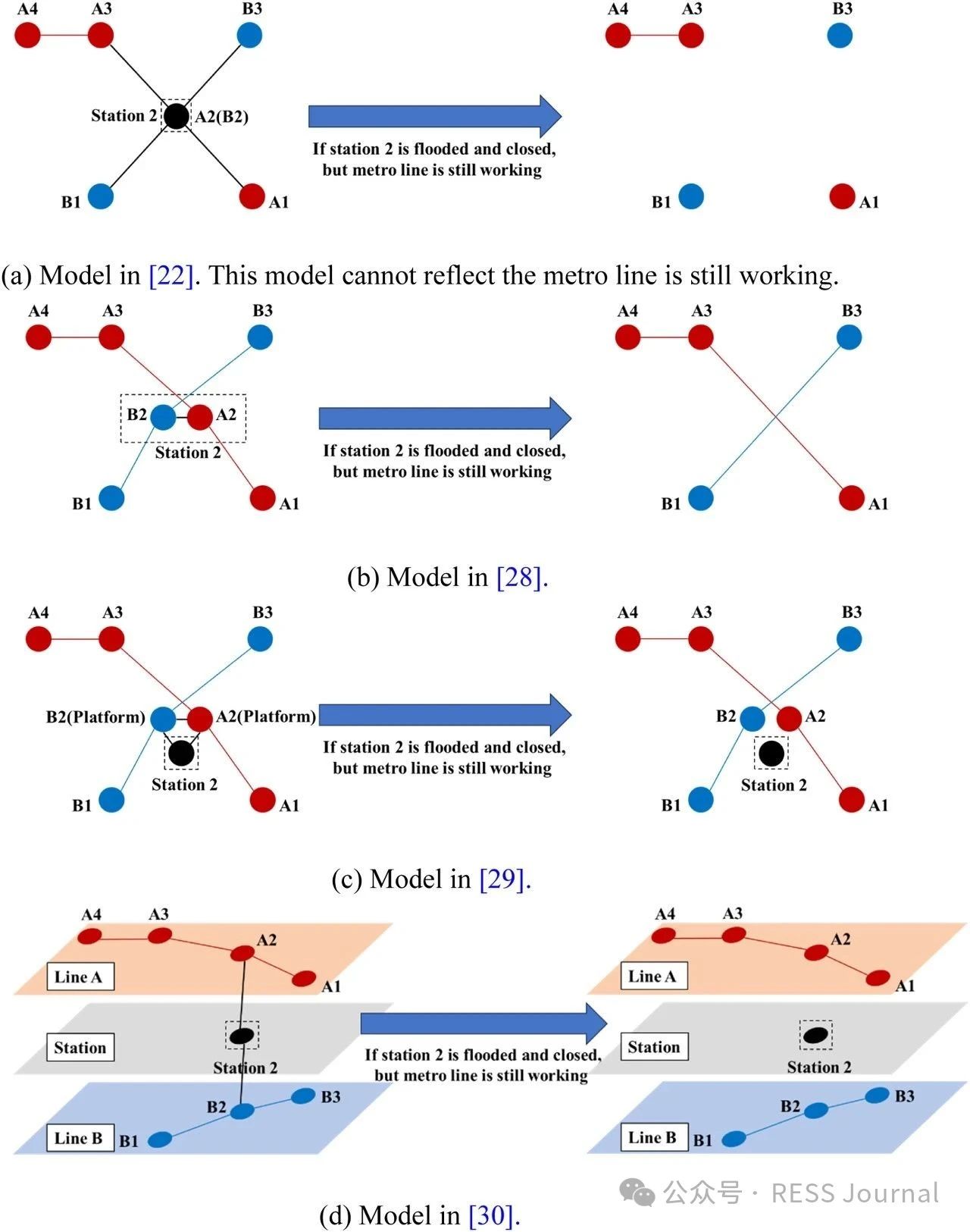
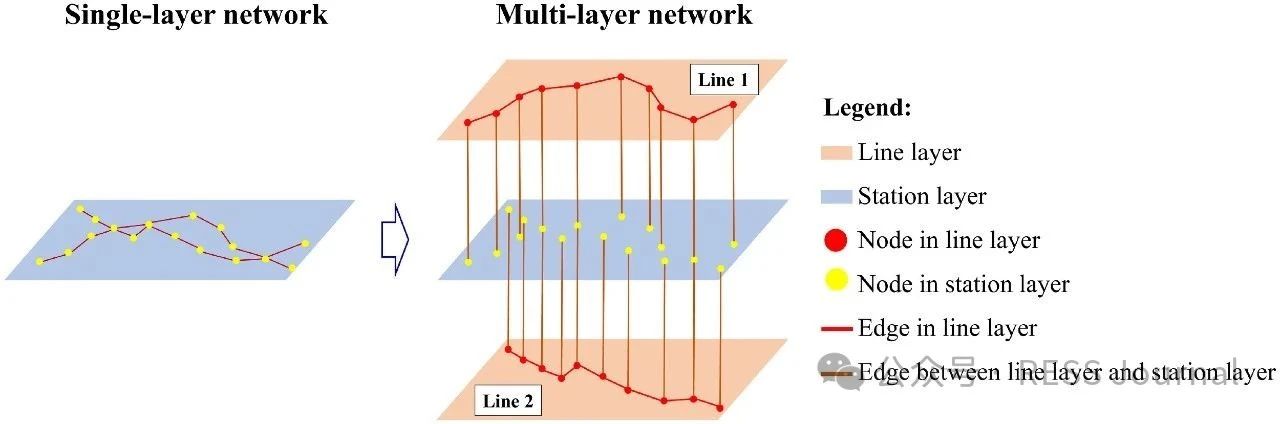
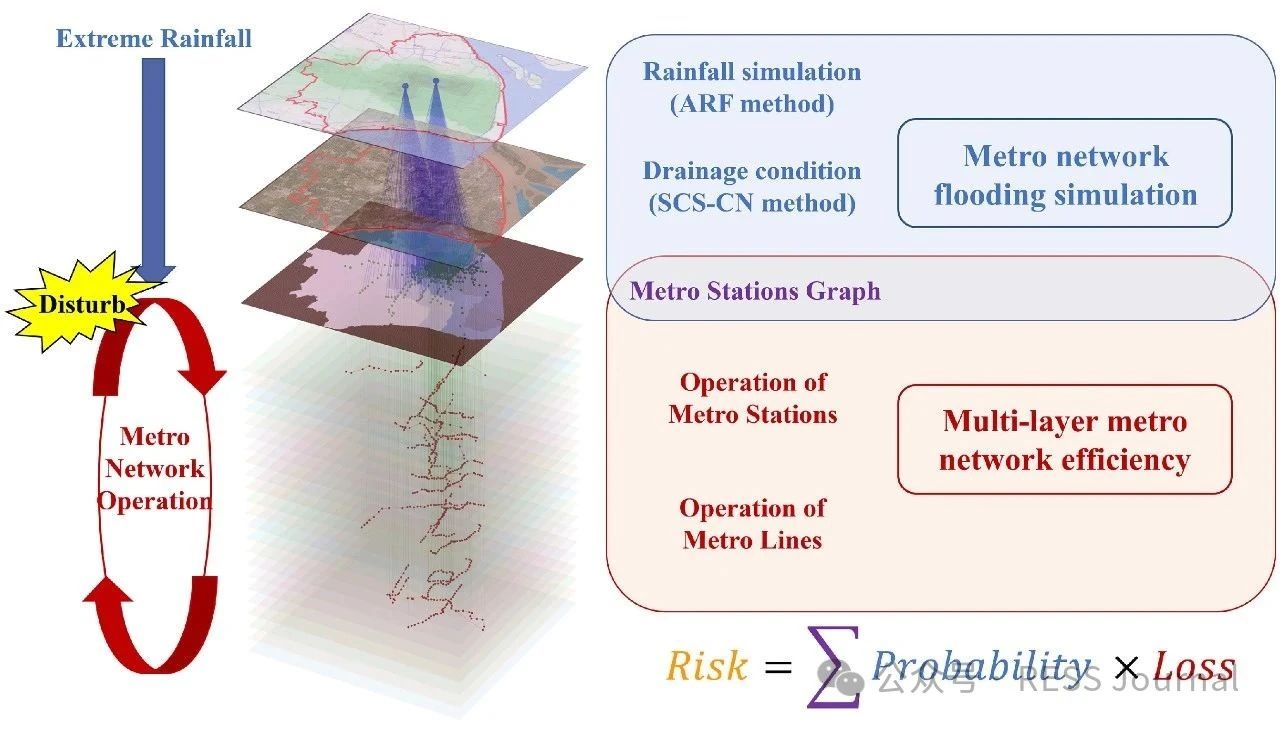
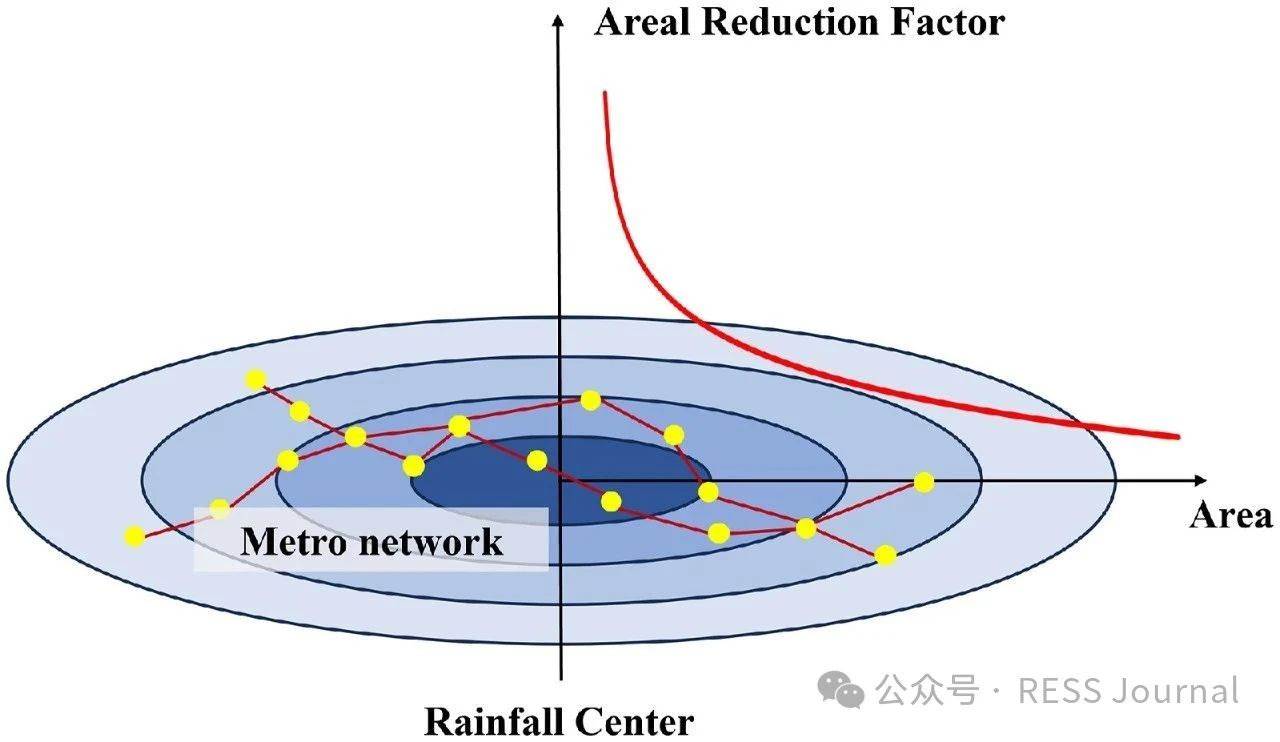
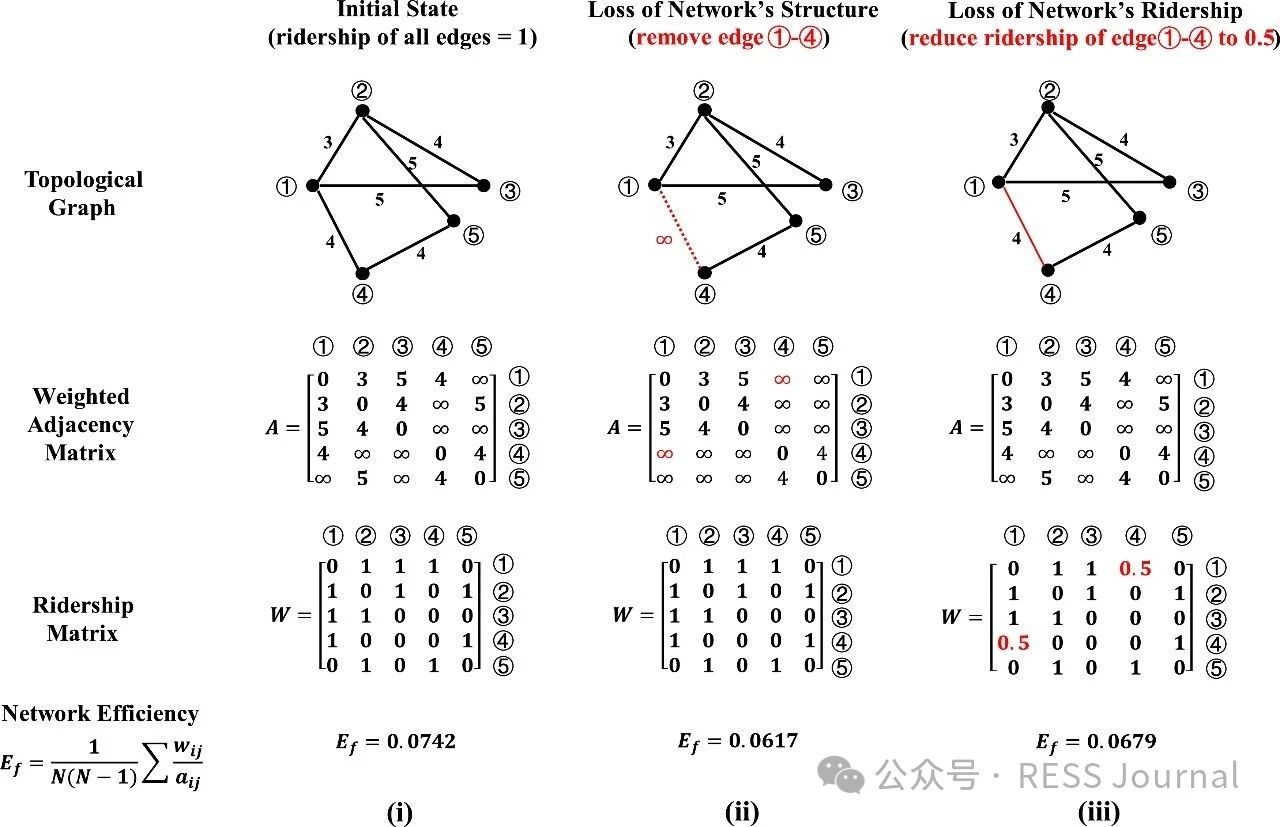
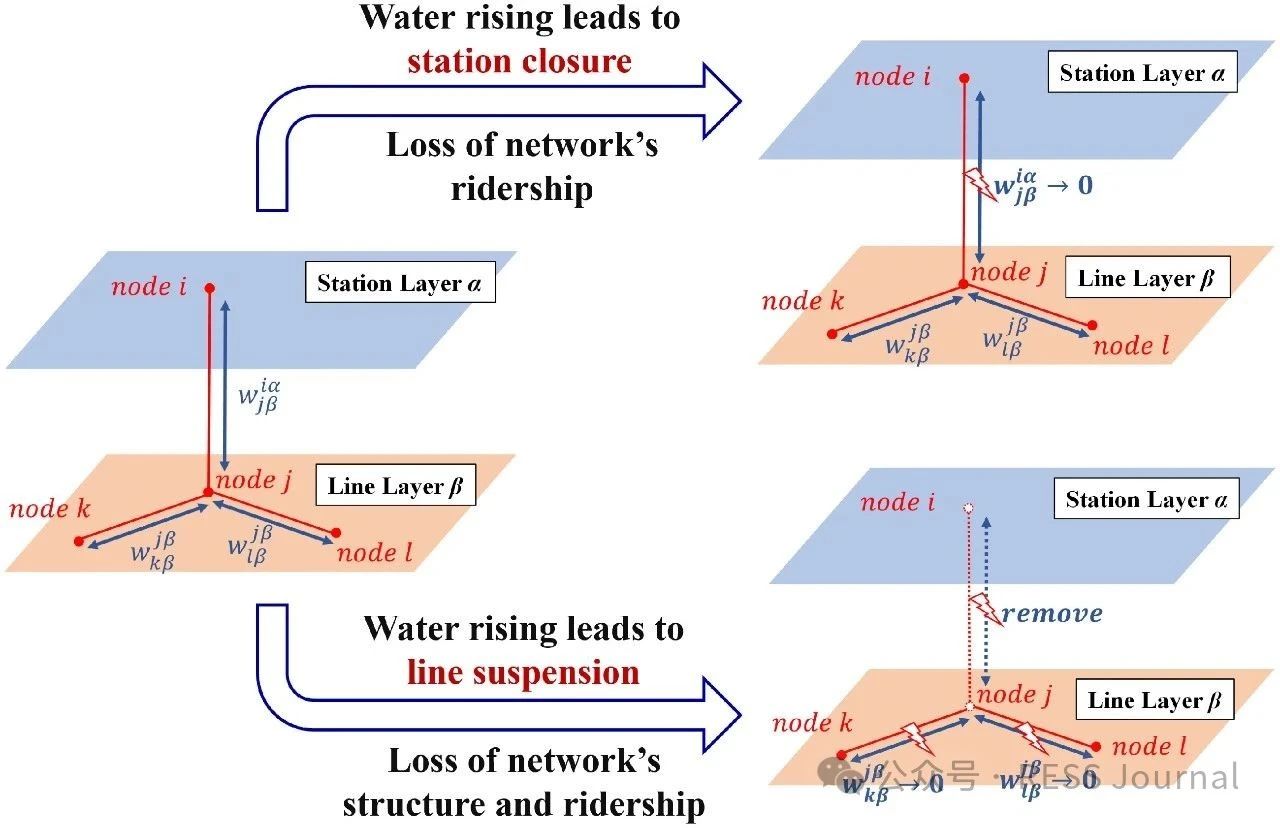
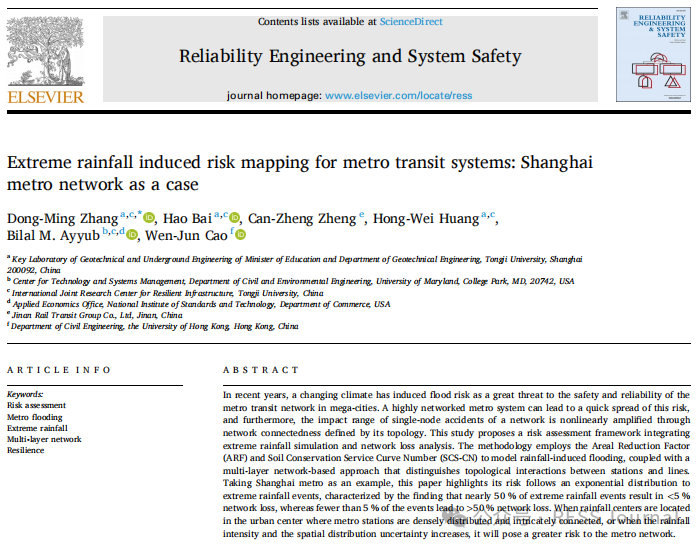
In recent years, a changing climate has induced flood risk as a great threat to the safety and reliability of the metro transit network in mega-cities. A highly networked metro system can lead to a quick spread of this risk, and furthermore, the impact range of single-node accidents of a network is nonlinearly amplified through network connectedness defined by its topology. This study proposes a risk assessment framework integrating extreme rainfall simulation and network loss analysis. The methodology employs the Areal Reduction Factor (ARF) and Soil Conservation Service Curve Number (SCS-CN) to model rainfall-induced flooding, coupled with a multi-layer network-based approach that distinguishes topological interactions between stations and lines. Taking Shanghai metro as an example, this paper highlights its risk follows an exponential distribution to extreme rainfall events, characterized by the finding that nearly 50 % of extreme rainfall events result in <5 % network loss, whereas fewer than 5 % of the events lead to >50 % network loss. When rainfall centers are located in the urban center where metro stations are densely distributed and intricately connected, or when the rainfall intensity and the spatial distribution uncertainty increases, it will pose a greater risk to the metro network.
相关推荐:轨道交通展展位预订 轨道交通展免费报名参观


2026年上半年,欧洲电动巴士注册量达到8141辆,较2025年同期的5477辆增长49%。这些数据由德国车辆协会DVV在其2026年第二季度欧洲巴士数据报告中发布,涵盖总重超过8吨的巴士,但不包括无轨电车。 2026年上半年,意大利是全球最大的纯电动巴士市场,注册量达1559辆,而2025年上半年仅为369辆。英国(迄今为止欧洲最大的电动巴士市场)紧随其后,注册量为1075辆,低于2025年上半年的1299辆。波兰的注册量为1060辆,而一年前仅为148辆。 挪威登记注册了660辆电动公交车,德国登记了553辆,荷兰登记了510辆。葡萄牙登记了473辆,法国337辆,瑞典326辆,西班牙223辆。 按照制造商排名,宇通以2026年上半年注册的1636辆电动客车位居榜首。依维柯/海利兹以1156辆的总注册量位居第二,其中依维柯注册量为911辆,依维柯/海利兹注册量为173辆,海利兹注册量为72辆。索拉里斯以1022辆的注册量位列第三。 比亚迪681辆,其次是曼恩584辆、梅赛德斯553辆和莱特巴士542辆。卡尔桑321,而 VDL202辆,亚历山大·丹尼斯157辆,沃尔沃153辆。 金龙146辆,中通客车13辆,伊利扎尔汽车109辆,金旅103辆,中车电动100辆。

合作邮箱:chinaiut@sgexpo.cn
新闻热线:021-3114 8748
广告/媒体合作:13916277698
转载内容版权归作者及来源网站所有,本站原创内容转载请注明来源
Copyright © 晟格会展(上海)有限公司 版权所有 Powered by Tp沪ICP备18026942号-6  沪公网安备 31011302006543号


